A Stainless steel conical fermenter is one of the most important vessels in modern brewing operations.
Designed to support efficient fermentation, yeast management, temperature control, and clean beer transfer, this type of
tank is widely used in craft breweries, commercial breweries, pilot brewing setups, and production facilities that aim to
improve consistency and streamline workflow. For brewers focused on brewing process optimization, the
conical fermenter is more than just a container for fermentation. It is a core process tool that helps reduce loss, improve
sanitation, enhance yeast recovery, and increase batch reproducibility.
In today’s competitive Brewing industry, process optimization is closely linked to equipment quality and vessel design.
The geometry, material, drainage system, cooling capability, pressure rating, and cleanability of a fermenter directly
affect fermentation performance and final beer quality. This is why the stainless steel conical fermenter
has become a standard choice for brewers who need durability, hygienic operation, and efficient workflow integration.
Whether used for ales, lagers, specialty beers, or experimental batches, the conical design supports a controlled,
repeatable fermentation environment that helps brewers maintain product stability and operational efficiency.
What Is a Stainless Steel Conical Fermenter?
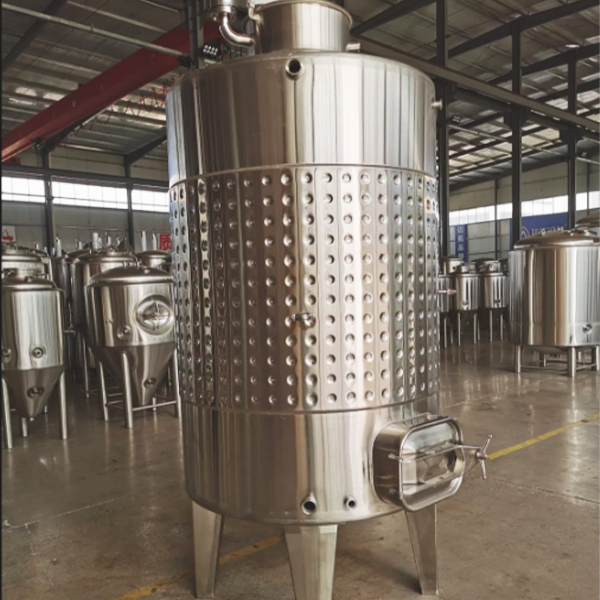
A stainless steel conical fermenter is a cylindrical Fermentation vessel with a cone-shaped bottom section. This conical
shape allows yeast, hop matter, trub, and other solids to settle naturally at the lowest point, making it easier to
separate unwanted sediment from the finished beer. The vessel is usually built from food-grade stainless steel, most
commonly SUS304 or SUS316, because stainless steel offers excellent corrosion resistance, long service life, and easy
sanitation. These features are especially valuable in breweries where hygiene and repeatability are essential.
In practical brewing applications, the conical fermenter supports multiple functions in a single tank. It can be used for
primary fermentation, secondary conditioning, yeast Harvesting, carbonation, and sometimes bright beer storage depending
on the process design. Because of its structure, the tank can simplify several steps that might otherwise require separate
vessels. This leads to better space utilization, fewer transfers, lower contamination risk, and improved efficiency across
the brewing process.
Why Stainless Steel Matters in Brewing Process Optimization
Stainless steel is the preferred material for most modern fermenters because it supports both product quality and
operational optimization. In brewing environments, equipment must withstand acidic liquids, frequent cleaning cycles,
sanitation chemicals, temperature changes, and repeated use without degrading. Stainless steel performs well under these
conditions and provides long-term reliability.
From a process optimization perspective, stainless steel contributes in several ways. First, its smooth and non-porous
surface reduces the likelihood of microbial buildup and off-flavor contamination. Second, it allows for effective CIP
(clean-in-place) systems, which save labor and reduce downtime. Third, stainless steel handles pressure and temperature
control better than many alternative materials, allowing brewers to operate with greater precision. Finally, the material’s
durability supports a lower total cost of ownership over time, especially in high-volume brewing operations.
The design of a conical fermenter directly supports brewing process optimization. The cone at the base creates a natural
settling zone where yeast and solids collect during and after fermentation. This makes it easier to remove sediment through
bottom valves while preserving clear beer above. As a result, brewers can reduce losses, improve clarity, and maintain
better control over the fermentation timeline.
The conical shape also improves yeast management. Healthy yeast can be harvested from the cone and reused in future
batches, helping breweries reduce yeast costs and improve strain consistency. In addition, the vessel typically includes
ports for temperature control, sampling, dry hopping, pressure relief, and racking, all of which support a more efficient
workflow. When properly integrated into a brewing system, the fermenter helps reduce manual handling and supports a more
stable, scalable production process.
Key Advantages of Stainless Steel Conical Fermenters
Advantage |
Process Benefit |
Impact on Brewing Optimization |
|---|
Food-grade stainless steel construction |
High resistance to corrosion and contamination |
Supports clean, reliable, and repeatable fermentation |
Conical bottom design |
Efficient sediment collection and discharge |
Improves beer clarity and reduces product loss |
Yeast harvesting capability |
Easy collection of usable yeast |
Helps lower operating costs and maintain yeast quality |
Cooling jacket compatibility |
Precise temperature management |
Improves fermentation stability and flavor consistency |
CIP-friendly surface |
Efficient cleaning and sanitation |
Reduces downtime and labor requirements |
Pressure-capable design |
Controlled fermentation and carbonation support |
Allows more flexible process control |
Durable structure |
Long service life under frequent use |
Improves return on investment |
Stainless Steel Conical Fermenter Specifications
Stainless steel conical fermenters are manufactured in a wide range of sizes and configurations. The ideal specification
depends on brewery size, batch volume, fermentation schedule, process goals, and available floor space. The table below
provides a general overview of common technical parameters used in brewing process optimization.
Specification |
Common Range / Option |
Purpose in Brewing |
|---|
Material |
SUS304 / SUS316 food-grade stainless steel |
Corrosion resistance, hygiene, durability |
Tank shape |
Cylindrical body with conical bottom |
Improves sediment separation and yeast collection |
Capacity |
From small pilot volumes to large production volumes |
Supports different brewery scales |
Conical angle |
Typically optimized for solids discharge |
Enhances trub and yeast removal efficiency |
Cooling system |
Jacketed cooling or external glycol circulation |
Maintains stable fermentation temperature |
Pressure rating |
Atmospheric or pressure-capable options |
Supports fermentation and carbonation control |
Top design |
Manway, domed top, or flat top with fittings |
Enables access, safety, and process control |
Bottom outlet |
Sanitary valve with sediment discharge port |
Facilitates clean transfer and solids removal |
Insulation |
Optional thermal insulation layer |
Improves temperature stability |
Surface finish |
Polished internal and external finish |
Supports cleaning and sanitary performance |
How the Conical Fermenter Supports Brewing Process Optimization
Brewing process optimization focuses on improving output quality, reducing waste, increasing consistency, and lowering
production inefficiencies. A stainless steel conical fermenter contributes to each of these goals. Because the vessel
reduces sediment transfer and simplifies yeast handling, it streamlines the fermentation workflow. This means fewer manual
interventions, less risk of contamination, and more reliable batch outcomes.
Temperature control is one of the most critical elements of fermentation optimization. A properly designed conical
fermenter often includes a cooling jacket or similar thermal management solution. This allows brewers to maintain the
exact fermentation temperature needed for the yeast strain being used. Stable temperature control helps minimize unwanted
flavor compounds, improves attenuation consistency, and creates a more predictable final product.
Another important factor is tank geometry. In a conical fermenter, solids naturally settle in the cone, making it easier
to remove trub without disturbing the beer above. This is especially useful in larger-scale brewing operations, where
transfers and separations can consume significant time and labor. By improving sediment handling, the conical fermenter
supports cleaner beer, fewer losses, and more efficient batch turnover.
Process Benefits by Brewing Stage
Brewing Stage |
Role of the Conical Fermenter |
Optimization Benefit |
|---|
Wort transfer |
Receives cooled wort into a sanitary vessel |
Reduces contamination risk and handling time |
Primary fermentation |
Provides a stable environment for yeast activity |
Improves conversion efficiency and flavor control |
Yeast sedimentation |
Allows solids to settle in the cone |
Improves clarity and simplifies separation |
Yeast harvesting |
Enables bottom collection of healthy yeast |
Supports cost reduction and yeast reuse |
Dry hopping or additions |
Can support controlled ingredient dosing |
Improves aroma management and batch consistency |
Conditioning |
Allows continued clarification and maturation |
Enhances flavor refinement and process efficiency |
Beer discharge |
Supports clean transfer from upper beer zone |
Reduces sediment carryover and product loss |
Common Features Found in Stainless Steel Conical Fermenters
Although exact configurations vary, many conical fermenters used in brewing process optimization share a set of common
features. These may include sanitary valves, sampling ports, thermowells, racking arms, pressure relief devices, manways,
and cleaning spray balls. Each feature plays a role in improving operation, sanitation, or control.
The racking arm is especially useful because it allows beer to be transferred from a point above the sediment layer.
This helps prevent trub from entering the finished beer stream. A sampling port supports quality monitoring during
fermentation, while a thermowell provides an accurate point for temperature sensing. In many systems, a CIP spray ball
simplifies cleaning by distributing water and cleaning solution across the internal surfaces.
For breweries focused on scaling production, these features are not optional conveniences. They are part of a broader
strategy for reducing process variability and improving operational control. The more effectively a fermenter supports
monitoring, cleaning, and separation, the easier it becomes to run consistent and efficient batches.
Material and Construction Considerations
When selecting a stainless steel conical fermenter, the quality of the construction is just as important as the vessel
type itself. Weld quality, seam finishing, internal polishing, insulation integrity, and fitting placement all influence
sanitation and performance. Poorly executed welds can create crevices where residue or microbes accumulate, which can lead
to contamination and cleaning challenges. A well-built vessel should be designed with sanitary principles in mind.
Food-grade stainless steel is usually preferred because it balances durability with hygiene. SUS304 is commonly used for
general brewing applications, while SUS316 may be selected for more aggressive cleaning environments or additional
corrosion resistance requirements. The internal finish should be smooth enough to assist with cleaning and reduce buildup.
Exterior finishing and insulation can also affect thermal stability and long-term appearance, especially in professional
brewery settings.
Stainless Steel Conical Fermenter Size Guide
Brewery Scale |
Typical Fermenter Size Range |
Use Case |
|---|
Home or experimental brewing |
Small capacity units |
Test batches, learning, recipe development |
Pilot brewery |
Medium-small capacity units |
Trial production, product validation, process testing |
Craft brewery |
Medium capacity units |
Regular batch fermentation and yeast reuse |
Commercial brewery |
Large capacity units |
High-volume production and fermentation scheduling |
Regional or industrial brewery |
Extra-large capacity units |
Continuous production optimization and throughput management |
Cleaning and Sanitation Advantages
Cleaning and sanitation are central to brewing process optimization. A stainless steel conical fermenter is highly valued
because it supports fast, effective, and repeatable cleaning routines. The non-porous nature of stainless steel makes it
less likely to absorb residues or harbor microorganisms. When paired with a sanitary layout and CIP system, the tank can
be cleaned thoroughly without extensive manual scrubbing.
Efficient sanitation helps breweries reduce turnaround time between batches. It also lowers the risk of infection and
off-flavors caused by residual yeast, bacteria, or hop debris. Since the fermenter is one of the most critical points in
the production chain, maintaining hygienic conditions inside the vessel is essential. Better sanitation leads to better
consistency, fewer rejected batches, and more predictable process performance.
Temperature Control and Fermentation Stability
Temperature control is one of the most influential factors in fermentation outcomes. Yeast behavior changes significantly
depending on temperature, and even small variations can affect attenuation, ester formation, and overall flavor profile.
A stainless steel conical fermenter designed with cooling capability gives brewers precise control over this critical
variable.
Jacketed fermenters or tanks with glycol circulation can maintain stable thermal conditions throughout the fermentation
cycle. This is particularly important for lager fermentation, high-gravity brewing, or any process where consistency is a
priority. Stable temperatures support yeast health and reduce the chance of stalled fermentation, excessive ester
production, or unwanted by-products. As a result, the fermenter becomes a direct contributor to process optimization.
Yeast Harvesting and Reuse
Yeast management is another major reason breweries use conical fermenters. The cone allows yeast to settle in a compact
area where it can be removed through a bottom valve. This helps brewers collect viable yeast more easily and store it for
reuse in future batches. Reusing healthy yeast can lower ingredient costs and improve production efficiency.
Proper yeast harvesting also improves process control. By reusing a known strain from a previous batch, breweries can
maintain more consistent fermentation behavior and flavor outcomes. This is especially valuable in facilities that produce
multiple batches per week or run standardized recipes. The conical fermenter supports this workflow by keeping yeast
collection sanitary, efficient, and repeatable.
Applications in Brewing Operations
Stainless steel conical fermenters are used across a wide variety of brewing applications. They are suitable for beers
requiring clean fermentation, controlled temperature, and efficient sediment removal. They are also useful in systems that
need yeast recovery, pressure fermentation, or compact production layouts.
- Craft beer production
- Commercial Beer fermentation
- Pilot batch testing
- Recipe development and trials
- Yeast propagation workflows
- Conditioning and clarification
- Pressure fermentation applications
- Seasonal or specialty beer production
In each of these applications, the common objective is the same: better process control with less waste and fewer
operational bottlenecks. The conical fermenter helps support this objective by combining multiple process functions in a
single sanitary vessel.
How to Evaluate a Conical Fermenter for Optimization Goals
When evaluating a stainless steel conical fermenter, breweries should consider several key factors. First, the vessel
should match the intended batch size and production frequency. Second, the tank should include the fittings and controls
required for cleaning, cooling, sampling, and transfer. Third, the construction quality should support long-term sanitary
use and operational durability. Finally, the system should integrate smoothly with existing brewery equipment.
A fermenter that is too small may create scheduling limitations, while a vessel that is too large may reduce flexibility
for smaller batches. Similarly, a tank without adequate cooling or sanitary fittings may limit the brewer’s ability to
maintain consistent fermentation. For this reason, process optimization depends not only on the conical shape itself, but
also on how well the entire fermenter specification aligns with the brewery’s production needs.
Comparison Table: Conical Fermenter vs. Basic Fermentation Vessel
Feature |
Conical Fermenter |
Basic Fermentation Vessel |
|---|
Sediment handling |
Efficient cone-based collection |
Less efficient solids removal |
Yeast harvesting |
Easy and sanitary |
Often more difficult |
Temperature control |
Often jacketed and optimized |
May have limited control |
Cleaning |
Designed for CIP and sanitation |
Can be harder to clean thoroughly |
Transfer efficiency |
Supports clearer beer transfer |
Higher risk of sediment carryover |
Process optimization |
Strong support for workflow improvement |
More limited optimization potential |
Important SEO Keywords for This Topic
For content development, category pages, product overviews, and technical blog articles, the following keyword themes are
highly relevant:
- stainless steel conical fermenter
- conical fermenter for brewing
- brewing process optimization
- stainless steel fermentation tank
- beer fermenter with conical bottom
- yeast harvesting fermenter
- jacketed conical fermenter
- sanitary brewing fermenter
- brewery fermentation equipment
- stainless steel brew tank
- fermentation vessel for beer production
- brewing tank optimization
Conclusion
The stainless steel conical fermenter for brewing process optimization is a fundamental piece of equipment
for breweries that want to improve consistency, sanitation, temperature control, yeast management, and production
efficiency. Its conical geometry makes sediment removal and yeast harvesting easier, while stainless steel construction
supports durability, hygiene, and long-term reliability. Combined with cooling systems, sanitary fittings, and CIP-ready
design, the conical fermenter contributes directly to a more efficient and controllable brewing process.
For breweries of all sizes, investing in the right fermenter design can lead to better beer quality, reduced waste, lower
labor requirements, and improved operational workflow. Because it supports multiple functions in one vessel, the stainless
steel conical fermenter remains one of the most practical and process-efficient solutions in modern brewing operations.
As brewing continues to focus on reproducibility, sanitation, and productivity, the role of the conical fermenter will
remain essential. Its combination of form, function, and sanitary design makes it a powerful tool for brewing process
optimization and a valuable asset in both craft and commercial brewing environments.
```
 +86 29-87031531





 핸드폰
핸드폰
논평
(0)