Fruit wine/vinegar Fermention Equipment and Turnkey Project
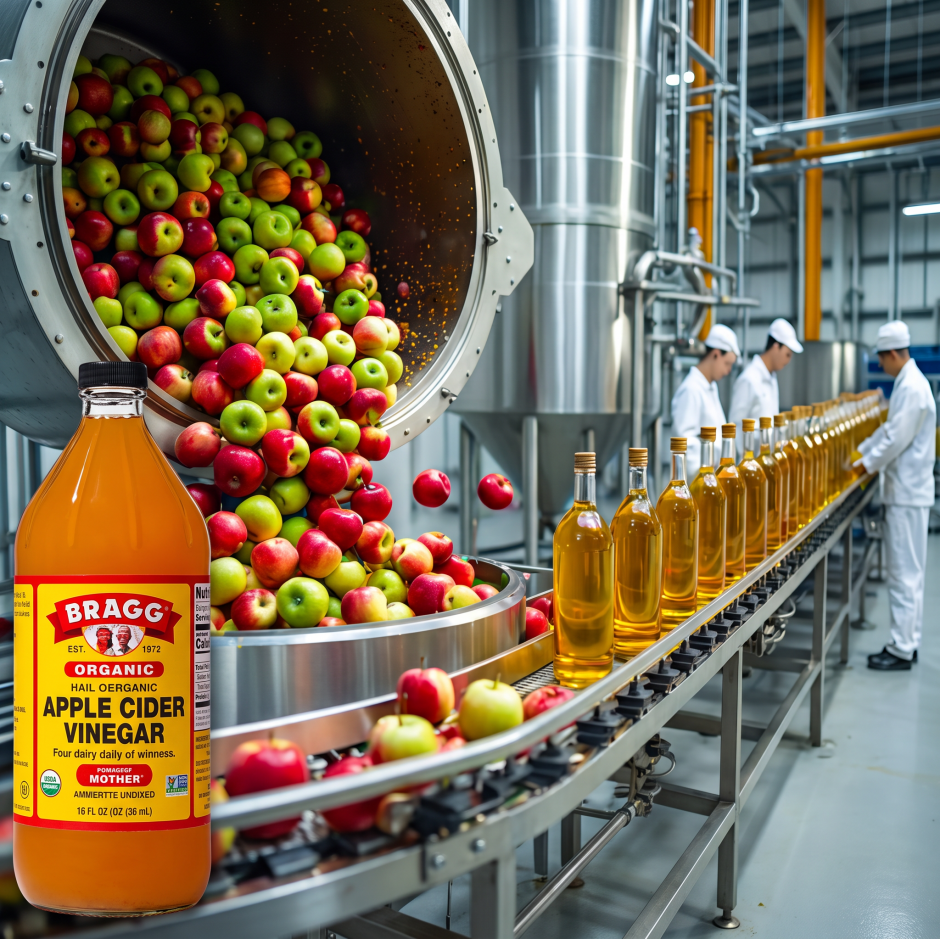
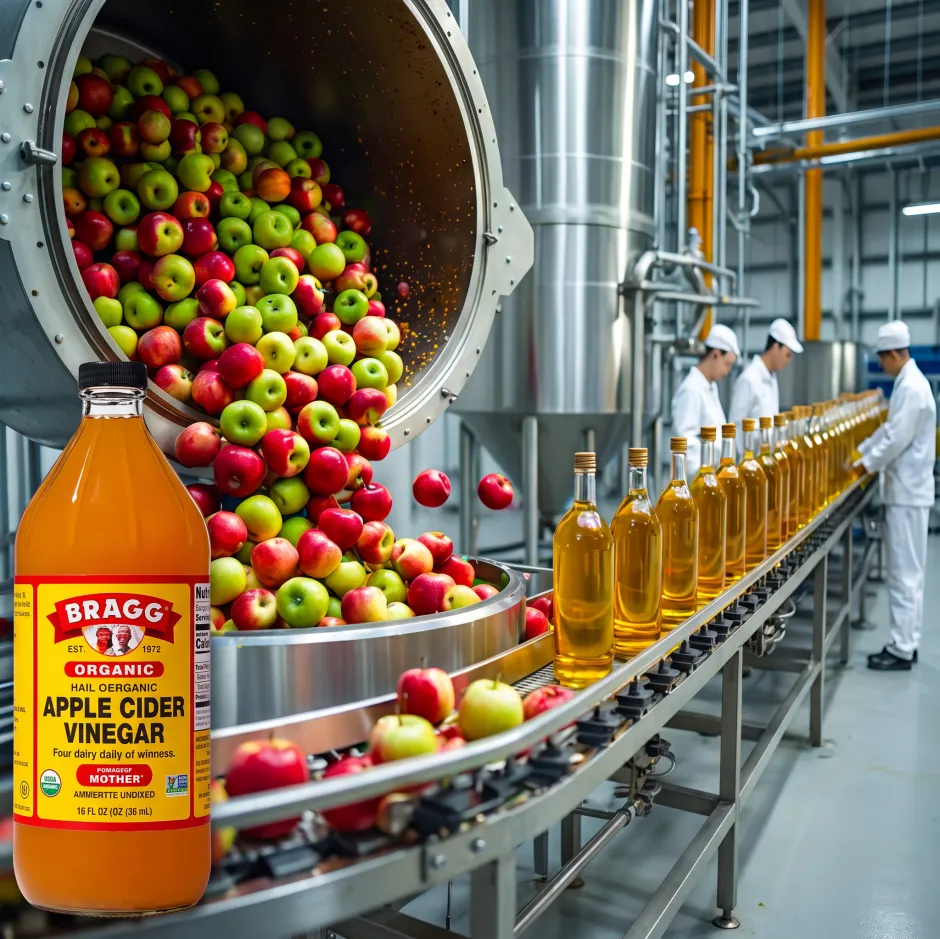
This integrated fruit wine/vinegar production line can process various fruits such as apples, grapes, pears, oranges. It covers fruit washing, crushing, juicing, fermentation, aging, sterilization and filling.
PRODUCT DESCRIPTION
Description
Fruit Wine/Vinegar is a kind of sour flavoring with rich nutrition and good flavor, which is mainly made of fruit, including pear, hawthorn, mulberry, grape, persimmon, apricot, citrus, kiwi, apple, watermelon, etc., or fruit processing waste, using modern biotechnology. It has both the nutritional and health functions of fruit and vinegar/wine, and is a new type of drink integrating the functions of nutrition, health care and diet therapy.
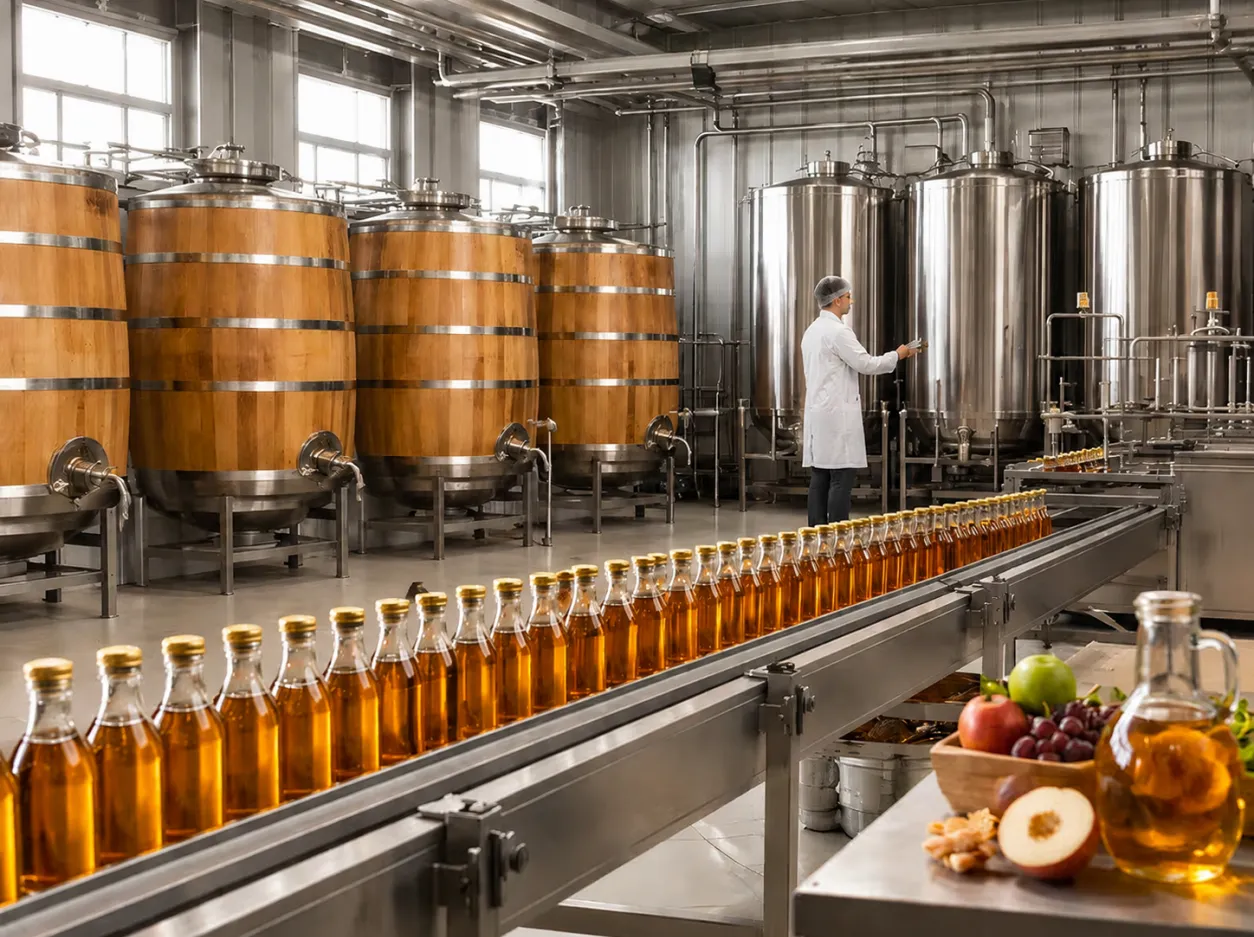
Our complete set of fruit wine & fruit Vinegar Production Equipment is suitable for apple, grape, pear, hawthorn, orange and other fruits. The whole process includes fruit pre-treatment, crushing, juicing, alcoholic fermentation, acetic fermentation, blending, sterilization, CIP cleaning and filling. The tanks adopt Stainless steel 304/316 material, fully automatic control, easy operation, complying with food hygiene standards. Customized capacity available from 500L to 50T per day.
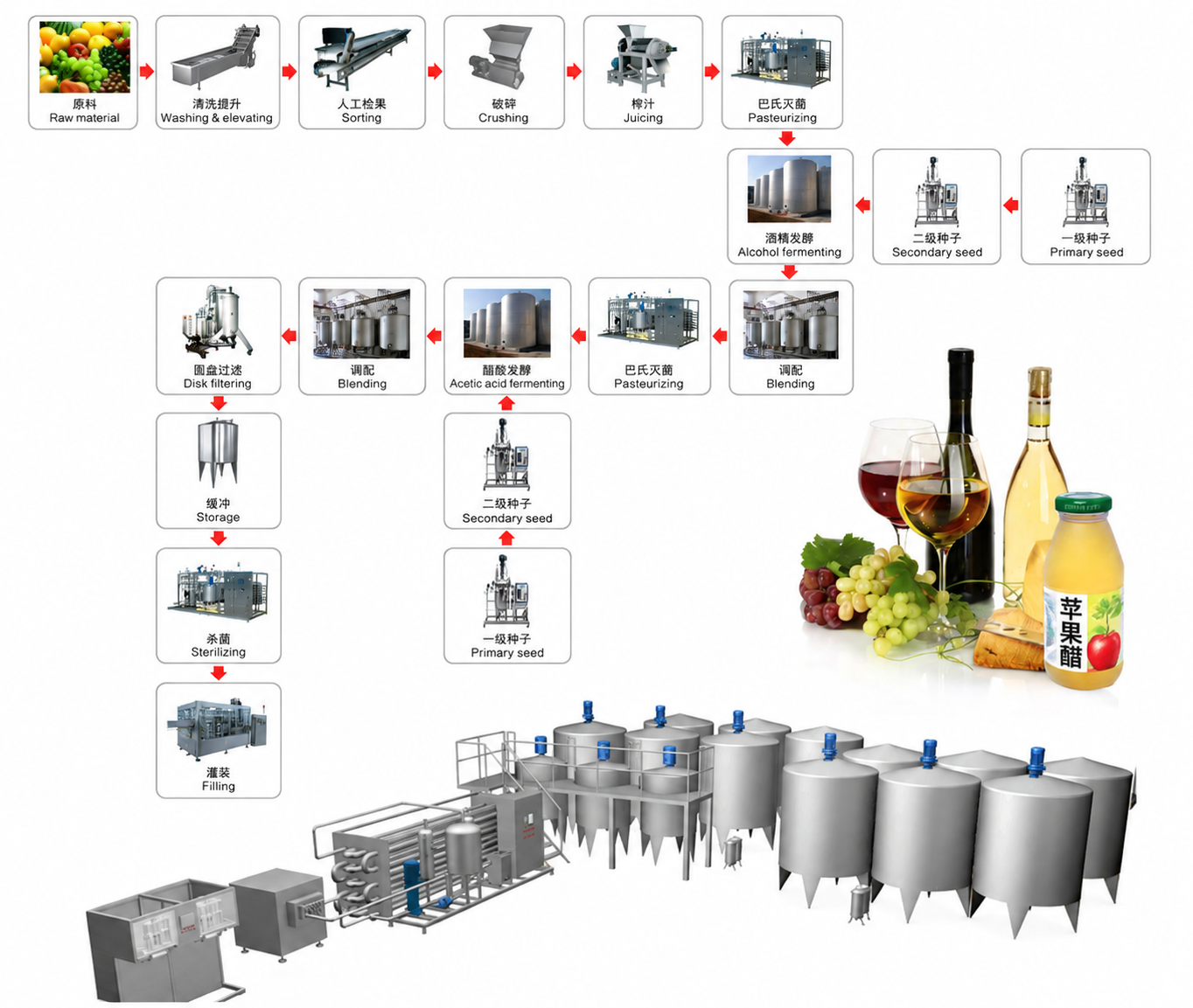
Core Components & Process Flow
1.Raw material treatment:
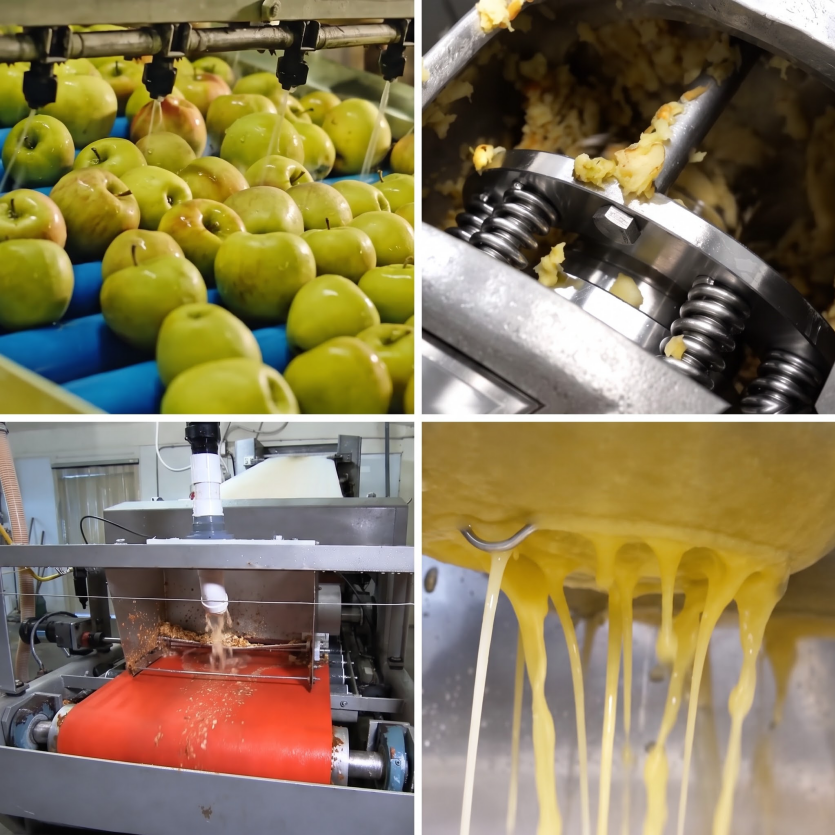
Pre-treatment includes fruit sorting, crushing, pressing, clarification of juice, and improvement of
juice. Broken, de-stalking:Breaking requires each seed to rupture, but the seeds and fruit stalks cannot be broken, otherwise the
oil esters, glycosides and some substances in the stalks in the seeds will increase the bitterness of the wine.The crushed pulp
immediately separates the pulp from the fruit stems, preventing the grassy taste and bitter substances in the fruit stems from
being dissolved. The crusher has a double roll crusher, a drum scraper, a centrifugal crusher, a hammer crusher and the like.
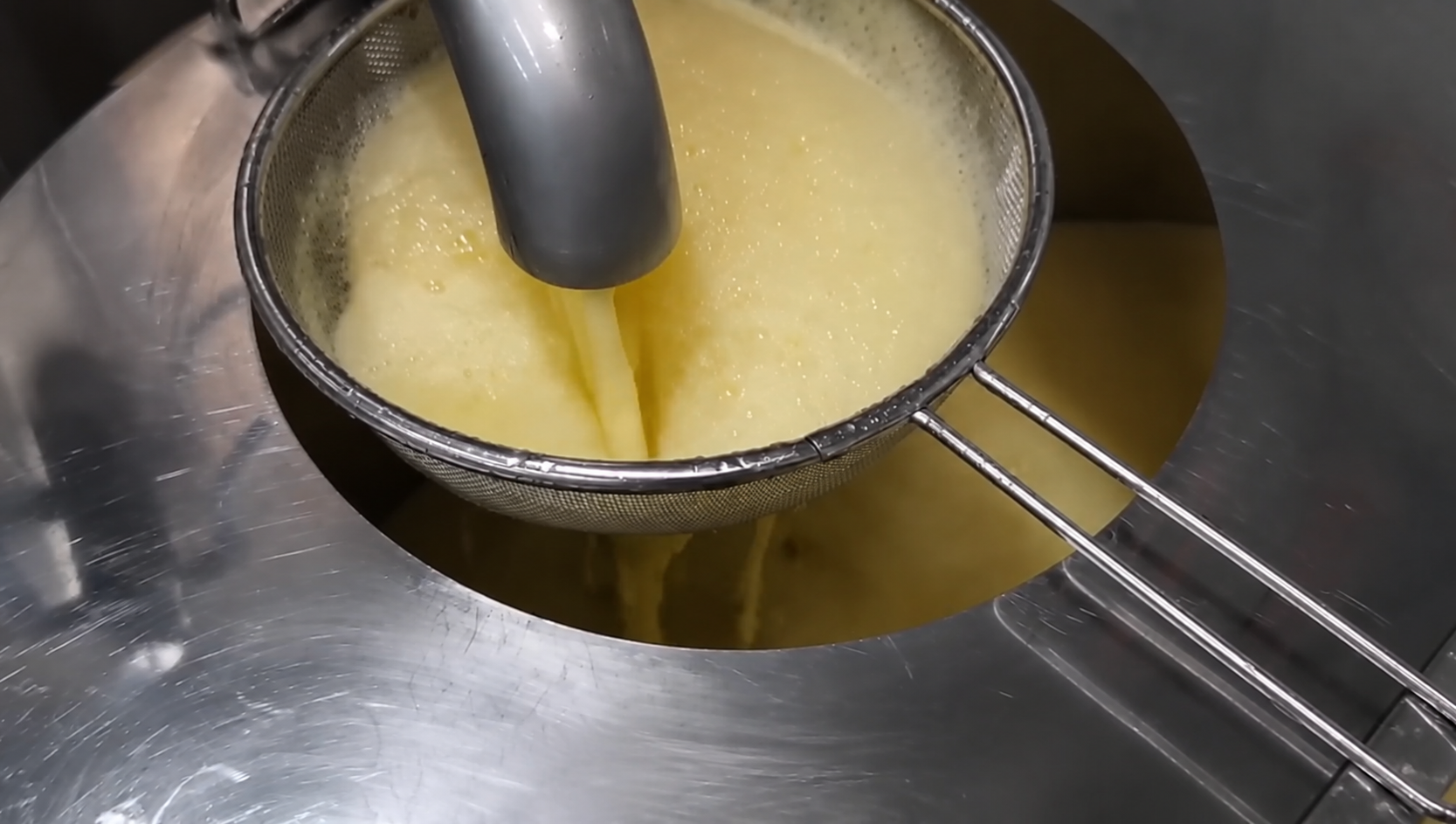
Juice adjustment:
1. Sugar adjustment: Brewing alcohol with 10%-12% alcohol content, the sugar content of the juice needs 17-20°Bx. If the sugar
content does not meet the requirements, sugar is needed. In actual processing, sucrose or concentrated juice is commonly used.
2. Acid adjustment: acid can inhibit the growth of bacteria, make the fermentation go smoothly; make the red wine bright color;make
the wine taste fresh and soft, and produce ester with alcohol to increase the aroma of the wine; increase the storage and
stability of the wine . Dry wine is easy to be 0.6%-0.8%, sweet wine 0.8%-1%, general pH is greater than 3.6 or titratable acid is
less than 0.65%. Acid should be added to the juice.
Alcohol fermentation:
1 Preparation of wine master: The wine mother is added to the fermented yeast after the expansion, and the production needs to be expanded three times before it can be added. It is called first-stage culture (test tube or flask culture), secondary culture,tertiary culture, and finally Cultivate in a jug.
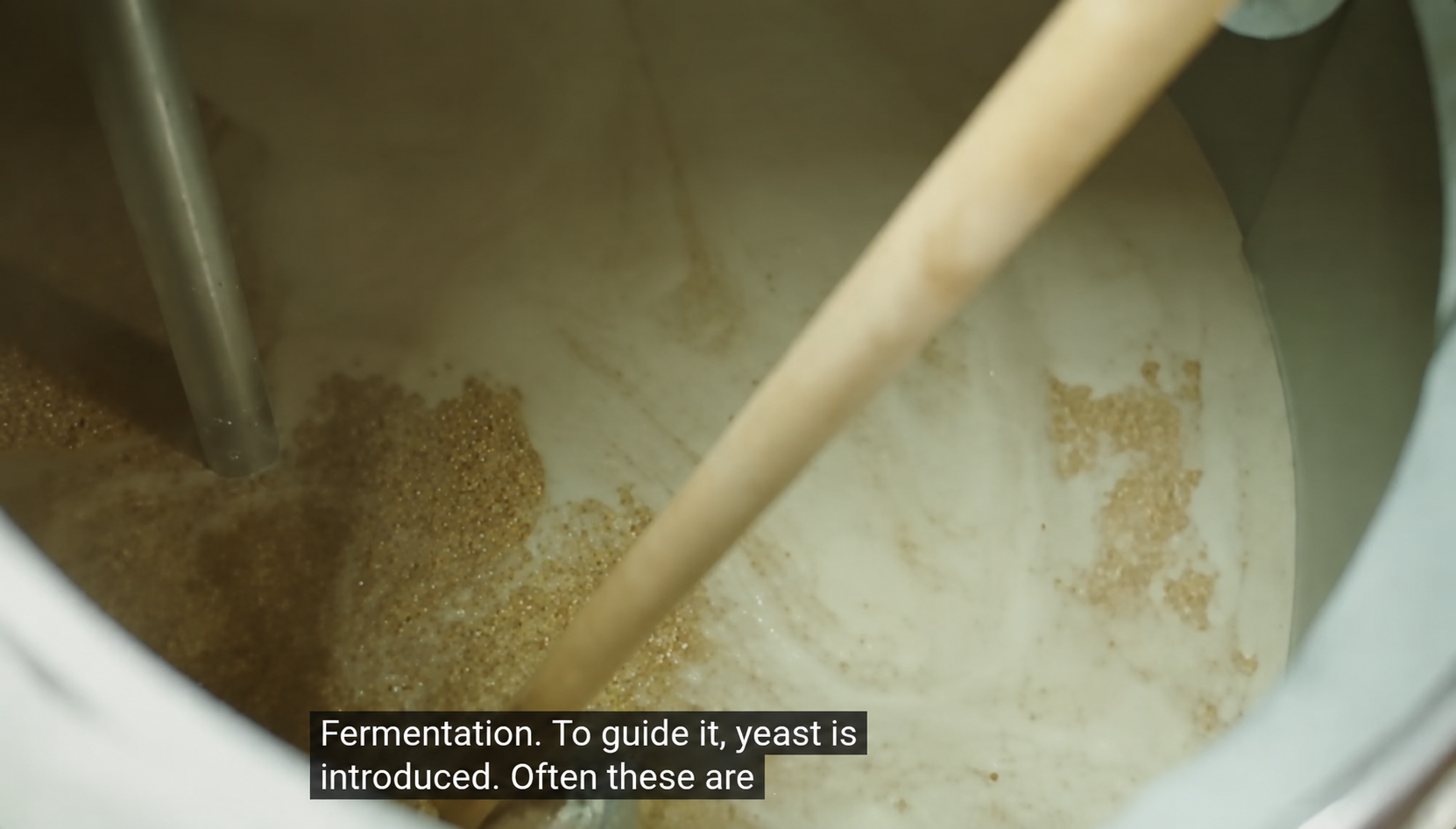
2 Fermentation equipment: The fermentation equipment should be able to control temperature, easy to wash, drain, and ventilate well. It should be cleaned before use and fumigation with SO2 or formaldehyde. The Fermentation vessel can also be used for both fermentation and storage, requiring no leakage, can be sealed, and does not chemically interact with the liquor. There are fermenters, fermentation tanks, and special fermentation equipment, such as rotary fermenters, automatic continuous cycle
fermenters.
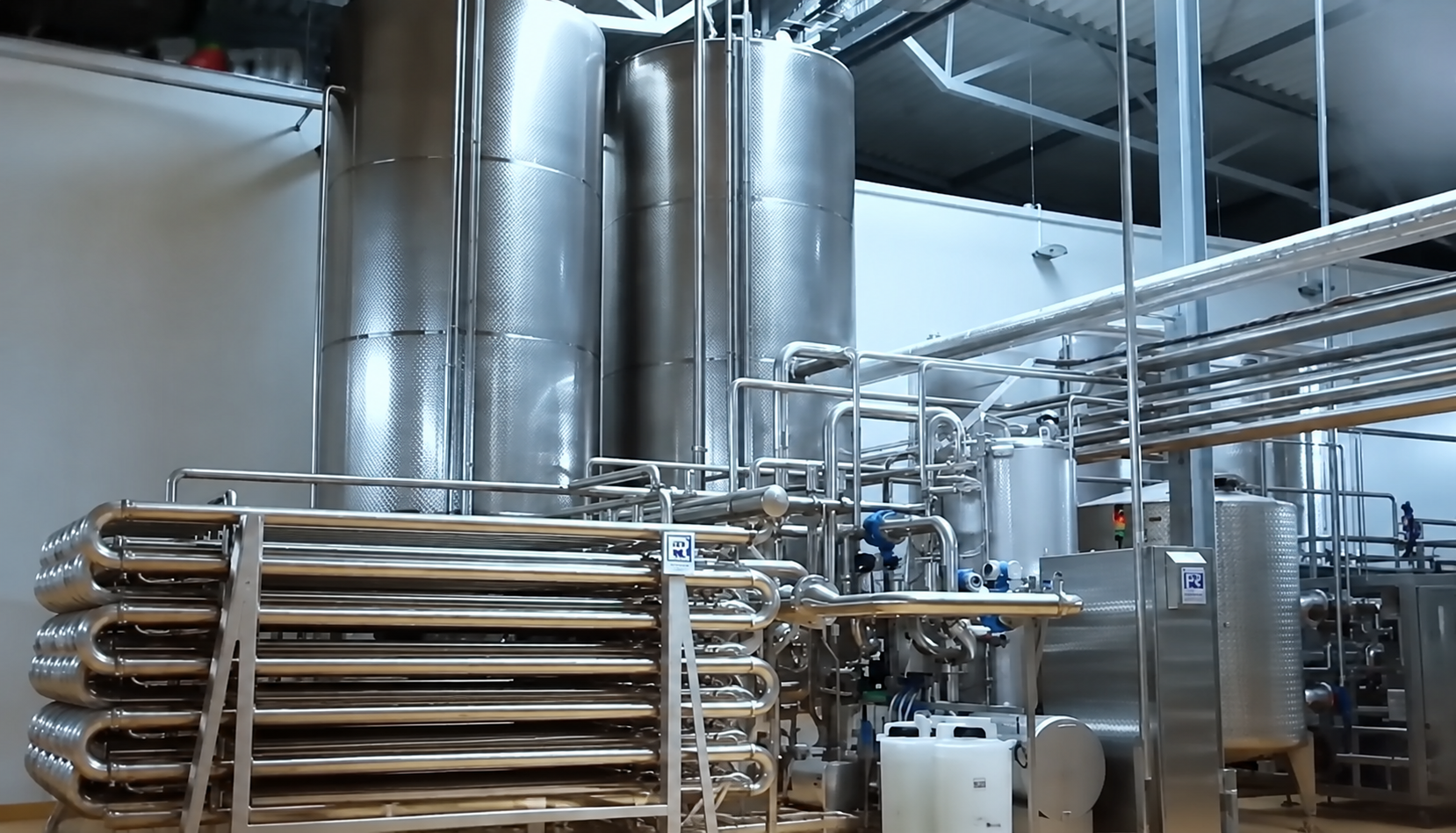
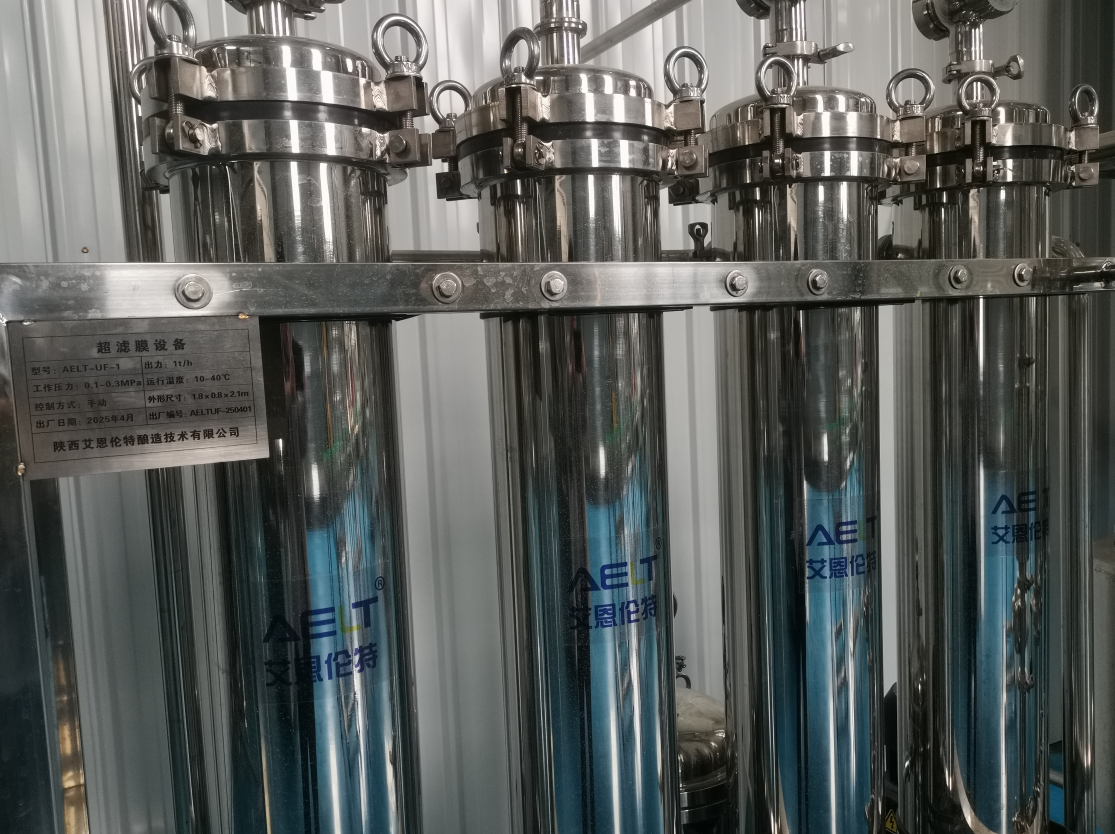
Filtration, sterilization, bottling: filtration with diatomaceous earth filtration, thin plate filtration, microporous membrane
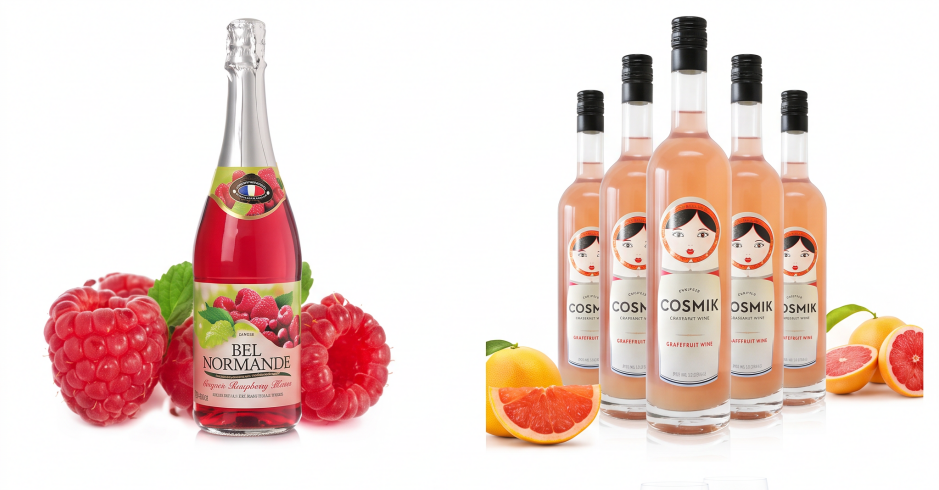
filtration, and the like. Fruit wine is usually packed in glass bottles. When bottling, empty bottles are immersed in 2-4% lye at
a temperature above 50 °C, cleaned, drained and sterilized. Fruit wine can be pasteurized and then bottled or cold-packed. Alcohol
with low alcohol content should be sterilized after bottling.
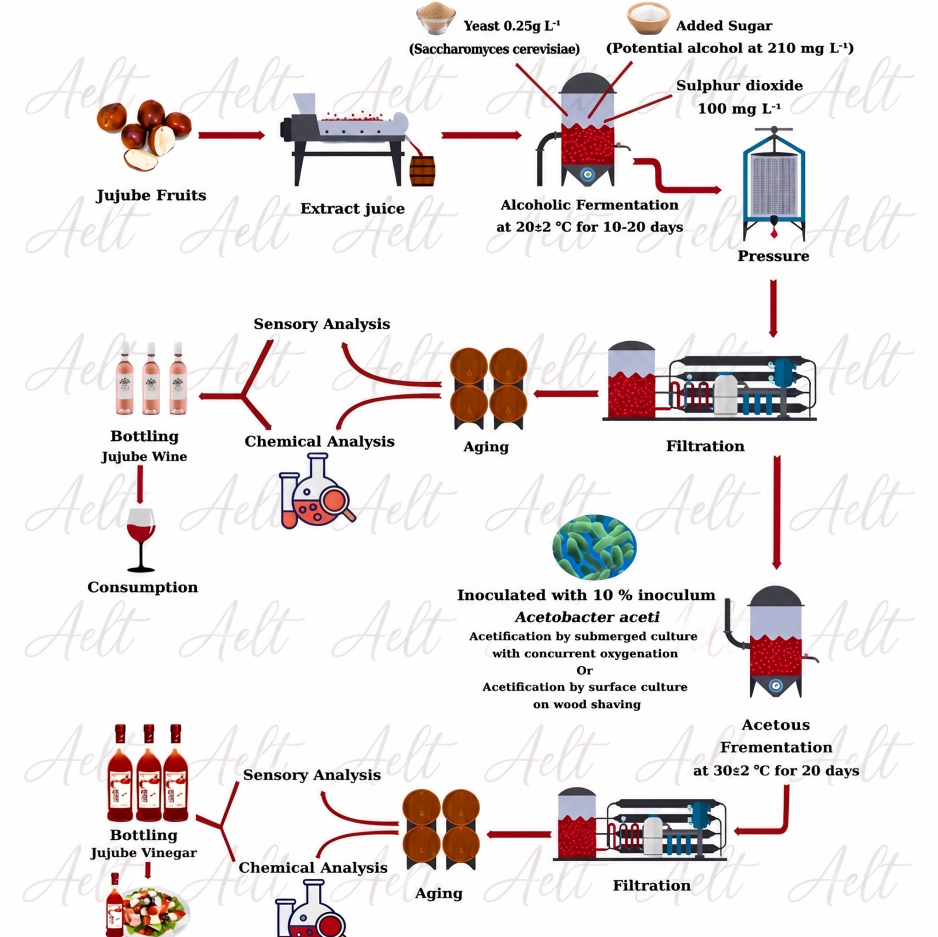
Vinegar Fermentation:
1 Preparation of wine master: The wine mother is added to the fermented yeast after the expansion, and the production needs to be expanded three times before it can be added. It is called first-stage culture (test tube or flask culture), secondary culture,tertiary culture, and finally Cultivate in a jug.
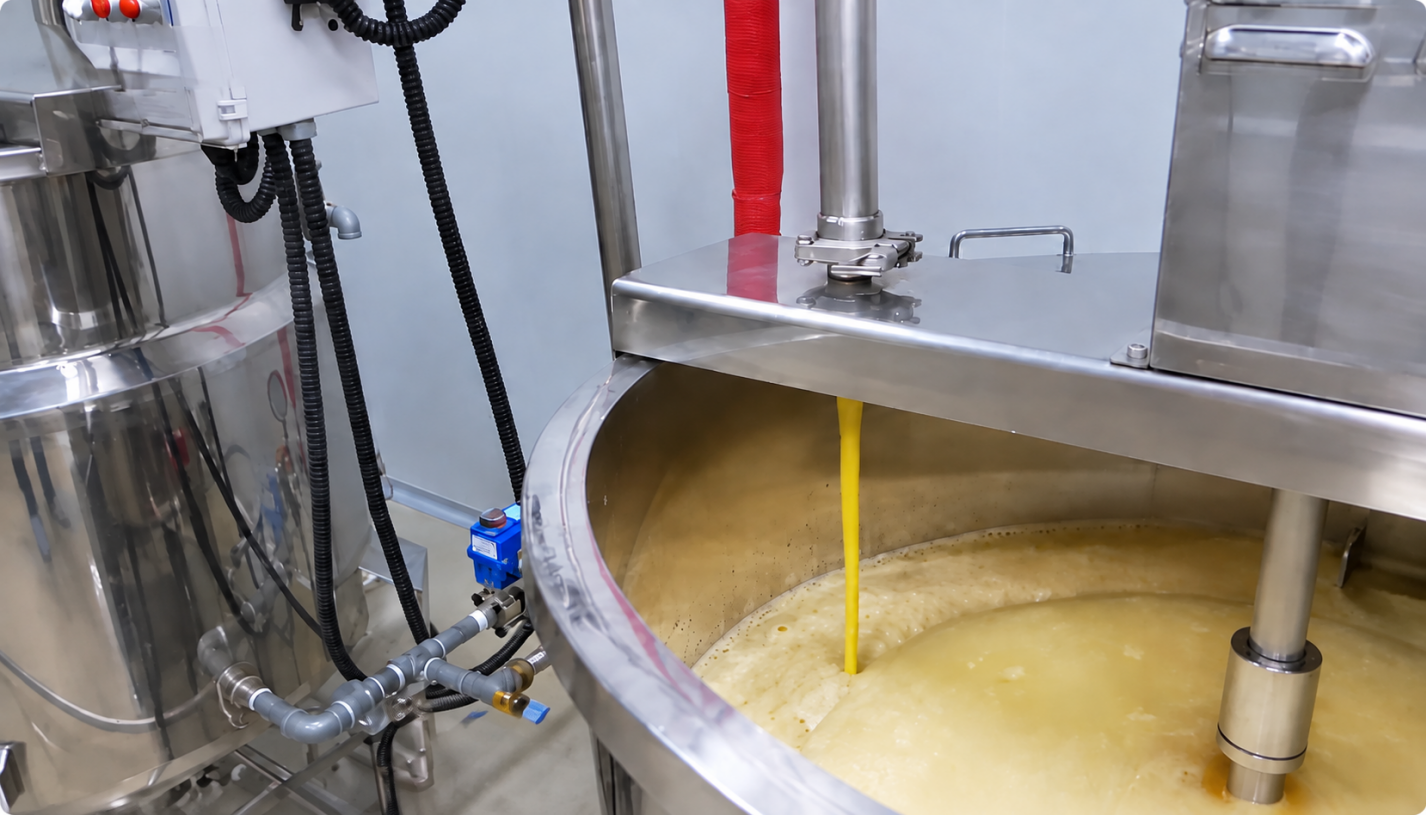
2 Fermentation equipment: The fermentation equipment should be able to control temperature, easy to wash, drain, and ventilate well. It should be cleaned before use and fumigation with SO2 or formaldehyde. The fermentation vessel can also be used for both fermentation and storage, requiring no leakage, can be sealed, and does not chemically interact with the liquor. There are fermenters, fermentation tanks, and special fermentation equipment, such as rotary fermenters, automatic continuous cycle
fermenters.
3. Filtration, sterilization, bottling: filtration with diatomaceous earth filtration, thin plate filtration, microporous membrane filtration, and the like. Fruit wine is usually packed in glass bottles. When bottling, empty bottles are immersed in 2-4% lye at a temperature above 50 °C, cleaned, drained and sterilized. Fruit wine can be pasteurized and then bottled or cold-packed. Alcohol with low alcohol content should be sterilized after bottling.
Product Parameters
Product Name | Fruit Wine Vinegar Processing Machine |
Material | 304 Stainless steel |
Function | fruit wine vinegar processing |
Capacity | 500-1000kg/h |
FAQ
Q: How about payment term, payment safety and delivery time?
A: We accept 40% deposit, balance before shipment. And Irrevocable L/C at sight.Delivery time is 7 to 30 days. It is according to order quantity.
Q: How could we confirm the products?
A: Our professional engineers will follow up all the designs and ajustments according to your requirement.OEM and ODM available.
Q: What services can we provide?
A:Accepted Delivery Terms: FOB,CFR,CIF,EXW,DDP,DDU,Express Delivery;
Accepted Payment Currency:USD,EUR,CNY;
Accepted Payment Type: T/T,L/C,Credit Cardl,Western Union,Alipay;
Q: How can I know your machine works well?
A: Before delivery, we shall test the machine working condition for you.
Q: What's your MOQ?
A: 1 set.
Complete Industry Guide For Fruit Wine/Vinegar Production
1. Introduction to Fruit Processing Industry Equipment
The global demand for fruit-based beverages and fermented products such as vinegar, wine, cider, and juice continues to grow rapidly. Modern food processing industries rely heavily on high efficiency, hygienic, and automated production lines to transform fresh fruits into high-value commercial beverages.
Among the most widely used systems are:
·
Cashew Apple Juice Vinegar Production Line
·
·
Pineapple Wine Processing Machine
·
·
Apple Cider Making Equipment
·
These systems integrate fruit washing, crushing, juicing, fermentation, clarification, filtration, sterilization, and filling into a continuous or semi-continuous production process.
Key advantages of modern fruit processing equipment include:
·
High automation level
·
·
Food-grade Stainless steel structure
·
·
Stable fermentation control
·
·
Energy-efficient operation
·
·
Scalable production capacity
·
·
Hygienic CIP Cleaning System
·
2. Cashew Apple Juice Vinegar Production Line Overview
2.1 What is Cashew Apple Juice Vinegar Production Line?
A cashew apple juice vinegar production line is an industrial system designed to process fresh cashew apples into vinegar through juice extraction, alcoholic fermentation, and acetic acid fermentation.
Cashew apple is rich in:
·
Natural sugars
·
·
Vitamin C
·
·
Organic acids
·
·
Aromatic compounds
·
This makes it an excellent raw material for vinegar production.
2.2 Main Production Process Flow
The full production line typically includes the following stages:
1.Raw Material Sorting
2.Washing and Cleaning
3.Crushing and Pulping
4.Juice Extraction
5.Juice Clarification
6.Alcoholic Fermentation
7.Acetic Acid Fermentation
8.Aging and Maturation
9.Filtration
10.Pasteurization
11.Filling and Packaging
2.3 Key Features of Cashew Apple Vinegar System
·
Fully automated fermentation control
·
·
Temperature and pH monitoring system
·
·
High juice yield extraction technology
·
·
Stainless steel 304/316 construction
·
·
Anti-corrosion fermentation tanks
·
·
Adjustable fermentation cycles
·
·
Modular production design
·
2.4 Equipment Composition
Equipment Section | Function |
Fruit Washing Machine | Removes dirt, impurities, pesticides |
Sorting Conveyor | Separates defective fruits |
Crusher & Pulper | Breaks fruit into mash |
Juice Extractor | Extracts liquid juice |
Enzyme Hydrolysis Tank | Improves juice yield |
Fermentation Tank | Alcoholic fermentation |
Acetic Fermentation Reactor | Converts alcohol into vinegar |
Filtration System | Removes solids and impurities |
Pasteurizer | Sterilization process |
Filling Machine | Bottling final vinegar |
2.5 Technical Specifications
Item | Specification |
Capacity | 500–20,000 L/day |
Material | Stainless Steel 304/316 |
Fermentation Type | Aerobic & Anaerobic |
Temperature Range | 20°C – 40°C |
Control System | PLC Automatic Control |
Cleaning System | CIP Cleaning System |
Power Supply | 220V / 380V / 415V |
2.6 Advantages of Cashew Apple Vinegar Production Line
·
High conversion efficiency from fruit to vinegar
·
·
Strong flavor retention system
·
·
Reduced manual labor cost
·
·
Stable fermentation output
·
·
Hygienic closed-loop system
·
·
Suitable for industrial-scale production
·
3. Pineapple Wine Processing Machine System
3.1 Overview of Pineapple Wine Processing Machine
The pineapple wine processing machine is a complete production system designed to convert fresh pineapple into fermented alcoholic beverages.
Pineapple is rich in:
·
Natural sugar (glucose, fructose)
·
·
Bromelain enzyme
·
·
Aromatic esters
·
·
Organic acids
·
These properties make pineapple ideal for wine fermentation.
3.2 Pineapple Wine Production Workflow
1. Pineapple Selection
2.Washing and Peeling
3.Crushing and Juicing
4.Sugar Adjustment
5.Yeast Inoculation
6.Primary Fermentation
7.Secondary Fermentation
8.Clarification
9.Filtration
10.Aging
11.Bottling
3.3 Core Processing Equipment
Machine Type | Function |
Pineapple Washer | Removes surface dirt and residues |
Peeling Machine | Removes outer skin efficiently |
Crushing Machine | Breaks fruit for juice extraction |
Juice Press | Extracts high-yield pineapple juice |
Fermentation Tank | Controlled alcoholic fermentation |
Cooling System | Maintains optimal fermentation temperature |
Filtering Machine | Clarifies wine |
Storage Tank | Aging and stabilization |
Filling Line | Bottling finished wine |
3.4 Technical Parameters
Parameter | Specification |
Capacity Range | 300–15,000 L/day |
Fermentation Time | 7–30 days |
Tank Material | Food-grade Stainless Steel |
Cooling Method | Glycol / Water Cooling |
Control System | PLC Touch Screen |
Hygiene Standard | GMP Food Standard |
3.5 Advantages of Pineapple Wine Machine
·
High aroma retention technology
·
·
Stable fermentation environment
·
·
Low oxidation system design
·
·
Energy-saving cooling system
·
·
Automated process control
·
·
High yield juice extraction efficiency
·
3.6 Industrial Applications
·
Fruit wine factories
·
·
Beverage processing plants
·
·
Organic alcohol production
·
·
Craft wine manufacturers
·
·
Export beverage industries
·
4. Apple Cider Making Equipment System
4.1 Introduction to Apple Cider Making Equipment
Apple cider making equipment is used to produce fermented apple beverages through controlled juice extraction and yeast fermentation processes.
Apple cider can be:
·
Alcoholic cider
·
·
Non-alcoholic cider
·
·
Sparkling cider
·
4.2 Apple Cider Production Process
1.Apple Sorting and Cleaning
2.Crushing and Grinding
3.Pressing and Juice Extraction
4.Juice Clarification
5.Fermentation
6.Aging
7.Stabilization
8.Filtration
9.Carbonation (optional)
10.Bottling
4.3 Key Equipment Components
Equipment | Function |
Apple Washer | Cleaning raw apples |
Sorting Table | Quality selection |
Grinder | Crushing apples |
Belt Press | Juice extraction |
Fermentation Tank | Alcohol conversion |
Bright Beer Tank | Clarification and storage |
Carbonation System | Adds carbonation (optional) |
Filling Machine | Packaging cider |
4.4 Technical Specifications
Item | Specification |
Output Capacity | 500–30,000 L/day |
Fermentation Duration | 5–21 days |
Material | Stainless Steel 304/316L |
Temperature Control | 0–30°C |
Pressure Range | Atmospheric / pressurized |
Automation Level | Semi or fully automatic |
4.5 Advantages of Apple Cider Equipment
·
High juice extraction efficiency
·
·
Flexible production scale
·
·
Low oxidation fermentation process
·
·
Precise temperature control
·
·
Easy cleaning and maintenance
·
·
Suitable for craft and industrial production
·
5. Comparison of Three Production Systems
Feature | Cashew Apple Vinegar | Pineapple Wine | Apple Cider |
Final Product | Vinegar | Alcoholic Wine | Cider Beverage |
Fermentation Type | Alcohol + Acetic | Alcoholic | Alcoholic |
Main Equipment | Vinegar reactor system | Wine fermentation system | Cider fermentation system |
Flavor Profile | Sour, aromatic | Sweet, fruity | Crisp, fresh |
Production Cycle | Medium | Long | Short–Medium |
6. Core Technology in Modern Fruit Processing Equipment
6.1 Stainless Steel Hygiene System
All systems use food-grade stainless steel 304/316L, ensuring:
·
Corrosion resistance
·
·
Long service life
·
·
Easy cleaning
·
·
No contamination risk
·
6.2 PLC Intelligent Control System
Modern production lines include:
·
Temperature monitoring
·
·
Fermentation curve control
·
·
Automatic alarms
·
·
Data recording system
·
·
Remote operation options
·
6.3 CIP Cleaning System
CIP (Clean-in-Place) allows:
·
Automatic tank cleaning
·
·
Chemical circulation cleaning
·
·
Reduced labor cost
·
·
High hygiene compliance
·
6.4 Energy Saving Technology
·
Heat recovery systems
·
·
Efficient motors
·
·
Low energy consumption pumps
·
·
Optimized fermentation insulation
·
7. Market Applications and Industry Demand
Fruit fermentation equipment is widely used in:
·
Beverage manufacturing factories
·
·
Organic food processing plants
·
·
Agricultural product deep processing
·
·
Export beverage industries
·
·
Craft beverage startups
·
·
Hotel and restaurant supply chains
·
8. Installation and Operation Workflow
8.1 Installation Steps
1.Equipment placement layout
2.Pipeline connection
3.Electrical system installation
4.Control system setup
5.Water and steam connection
6.Testing and calibration
8.2 Operation Workflow
·
Raw material loading
·
·
Automated processing start
·
·
Fermentation monitoring
·
·
Quality control sampling
·
·
Final product packaging
·
9. Maintenance and Safety Guidelines
·
Regular cleaning of fermentation tanks
·
·
Calibration of sensors
·
·
Lubrication of mechanical parts
·
·
Monitoring of temperature control systems
·
·
Routine sterilization procedures
·
10. Future Trends in Fruit Processing Industry
·
Fully automated smart factories
·
·
AI fermentation control systems
·
·
Green and sustainable production
·
·
Modular mobile processing units
·
·
High-efficiency enzymatic extraction
·
·
Zero-waste processing systems
·
11. Conclusion
The cashew apple juice vinegar production line, pineapple wine processing machine, and apple cider making equipment represent advanced fruit processing technologies that combine automation, hygiene, and high efficiency.
With increasing global demand for natural beverages, fermented drinks, and organic food products, these systems provide a strong foundation for scalable and profitable production.
Their integration of modern fermentation technology, stainless steel construction, PLC control, and energy-saving design ensures long-term stability, high output quality, and competitive industrial performance.
 +86 29-87031531






 핸드폰
핸드폰